Buy sun-studio.eu ?
We are moving the project
sun-studio.eu .
Are you interested in purchasing the domain
sun-studio.eu ?
domain@kv-gmbh.de · 0541-91531010
Buy sun-studio.eu ?
Where does the energy inside a star come from?
The energy inside a star comes from nuclear fusion, a process in which the nuclei of atoms are combined to form a heavier nucleus, releasing a large amount of energy in the process. In the core of a star, the extreme pressure and temperature cause hydrogen atoms to fuse together to form helium, releasing a tremendous amount of energy in the form of light and heat. This process is what powers the star and allows it to shine for billions of years. **
Is the star a sun?
Yes, a star is essentially a massive, luminous sphere of plasma held together by gravity, just like our Sun. Stars, including our Sun, generate energy through nuclear fusion in their cores, emitting light and heat. So, in that sense, a star can be considered a sun. **
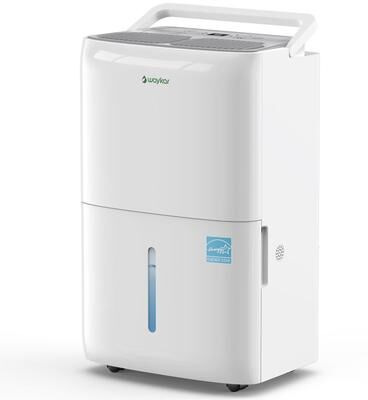
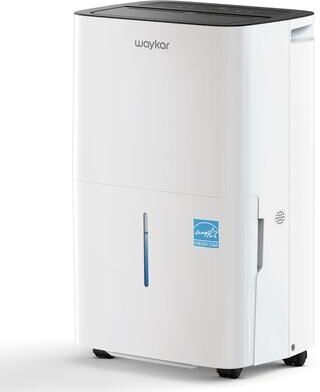
Similar search terms for Waykar-Energy-Star-120
Top-Angebote
Products related to Waykar-Energy-Star-120:
-
Waykar ENERGY STAR Crawl Space 125 Pints Dehumidifier with Pump125 Pint Capacity – Powerful crawl space dehumidifier with pump for year-round moisture control in crawl spaces and basements. ENERGY STAR Certified – High-efficiency dehumidifier designed to save energy and reduce operating costs.579,99 $*Shipping: 0,00 $Secure redirect to the provider
-
Waykar 80 Pint Energy Star Dehumidifier, up to 5500 Sq.Ft for Room BasementPowerful Dehumidification: Removes up to 80 pints of moisture per day, specially designed for large spaces with a coverage area of up to 5,500 sq. ft.—ideal for large basements and spacious rooms.205,99 $*Shipping: 0,00 $Secure redirect to the provider



-
Is every star a sun?
No, not every star is a sun. The term "sun" specifically refers to the star at the center of our solar system. Other stars in the universe are similar to our sun in that they are massive, luminous spheres of plasma, but they are not specifically called "suns." Each star has its own unique characteristics and properties, and while they may share similarities with our sun, they are not all considered to be "suns." **
-
Do students have 120 days of vacation?
No, students do not have 120 days of vacation. In most countries, students have a summer vacation that typically lasts around 2-3 months, which is roughly 60-90 days. Additionally, they have shorter breaks throughout the year, such as winter and spring breaks, but these do not add up to 120 days. Overall, the total vacation time for students is significantly less than 120 days. **
-
Is the North Star a sun?
No, the North Star, also known as Polaris, is not a sun. It is actually a star, specifically a yellow supergiant star located in the constellation Ursa Minor. The North Star appears bright in the night sky and is used for navigation because it remains nearly stationary while other stars appear to move throughout the night. **
-
Is the sun a gas star?
Yes, the sun is a gas star. It is primarily composed of hydrogen and helium, with small amounts of other elements. The sun's core is extremely hot and dense, causing nuclear fusion reactions that release energy in the form of light and heat. This makes the sun a typical example of a gas star, as it is mainly composed of gases and generates energy through nuclear fusion. **
'Why 120?'
The number 120 is often used as a benchmark or standard in various contexts because it is a highly composite number, meaning it has many factors. This makes it a convenient number for dividing into smaller parts or units. In addition, 120 is divisible by 1, 2, 3, 4, 5, 6, 8, 10, 12, 15, 20, 24, 30, 40, 60, and 120, making it a versatile number for calculations and measurements. **
'Recently, the Energy Star logo has been appearing when I start my PC.'
The Energy Star logo appearing when you start your PC indicates that your computer meets the energy efficiency standards set by the Environmental Protection Agency (EPA) and the Department of Energy (DOE). This means that your computer is designed to consume less energy and operate more efficiently, which can help reduce your electricity bills and minimize your environmental impact. It's a good sign that your computer is designed with energy efficiency in mind. **
Top-Angebote
Products related to Waykar-Energy-Star-120:
-
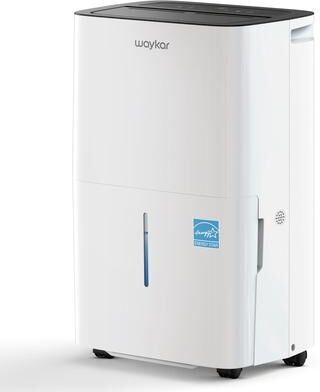
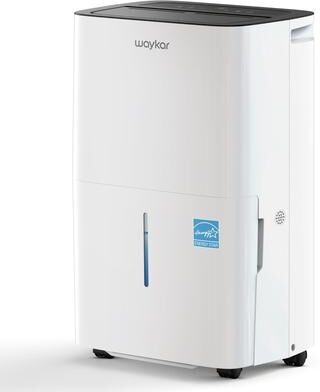
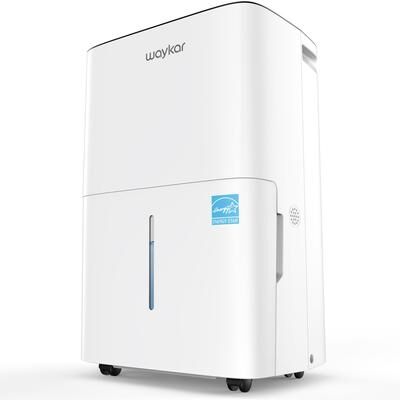
Waykar Energy Star 120 Pint Dehumidifier-Up to 6,500 Sq. FtPowerful Moisture Removal & Wide Coverage: Removes up to 120 pints of moisture per day, making it ideal for efficiently managing humidity in homes, offices, and large basements up to 6,500 sq. ft.187,10 $*Shipping: 0,00 $Secure redirect to the provider
-
Waykar ENERGY STAR Crawl Space 125 Pints Dehumidifier with Pump125 Pint Capacity – Powerful crawl space dehumidifier with pump for year-round moisture control in crawl spaces and basements. ENERGY STAR Certified – High-efficiency dehumidifier designed to save energy and reduce operating costs.579,99 $*Shipping: 0,00 $Secure redirect to the provider
-
Where does the energy inside a star come from?
The energy inside a star comes from nuclear fusion, a process in which the nuclei of atoms are combined to form a heavier nucleus, releasing a large amount of energy in the process. In the core of a star, the extreme pressure and temperature cause hydrogen atoms to fuse together to form helium, releasing a tremendous amount of energy in the form of light and heat. This process is what powers the star and allows it to shine for billions of years. **
-
Is the star a sun?
Yes, a star is essentially a massive, luminous sphere of plasma held together by gravity, just like our Sun. Stars, including our Sun, generate energy through nuclear fusion in their cores, emitting light and heat. So, in that sense, a star can be considered a sun. **
-
Is every star a sun?
No, not every star is a sun. The term "sun" specifically refers to the star at the center of our solar system. Other stars in the universe are similar to our sun in that they are massive, luminous spheres of plasma, but they are not specifically called "suns." Each star has its own unique characteristics and properties, and while they may share similarities with our sun, they are not all considered to be "suns." **
-
Do students have 120 days of vacation?
No, students do not have 120 days of vacation. In most countries, students have a summer vacation that typically lasts around 2-3 months, which is roughly 60-90 days. Additionally, they have shorter breaks throughout the year, such as winter and spring breaks, but these do not add up to 120 days. Overall, the total vacation time for students is significantly less than 120 days. **
Similar search terms for Waykar-Energy-Star-120
-
Waykar 80 Pint Energy Star Dehumidifier, up to 5500 Sq.Ft for Room BasementPowerful Dehumidification: Removes up to 80 pints of moisture per day, specially designed for large spaces with a coverage area of up to 5,500 sq. ft.—ideal for large basements and spacious rooms.205,99 $*Shipping: 0,00 $Secure redirect to the provider
-
Is the North Star a sun?
No, the North Star, also known as Polaris, is not a sun. It is actually a star, specifically a yellow supergiant star located in the constellation Ursa Minor. The North Star appears bright in the night sky and is used for navigation because it remains nearly stationary while other stars appear to move throughout the night. **
-
Is the sun a gas star?
Yes, the sun is a gas star. It is primarily composed of hydrogen and helium, with small amounts of other elements. The sun's core is extremely hot and dense, causing nuclear fusion reactions that release energy in the form of light and heat. This makes the sun a typical example of a gas star, as it is mainly composed of gases and generates energy through nuclear fusion. **
-
'Why 120?'
The number 120 is often used as a benchmark or standard in various contexts because it is a highly composite number, meaning it has many factors. This makes it a convenient number for dividing into smaller parts or units. In addition, 120 is divisible by 1, 2, 3, 4, 5, 6, 8, 10, 12, 15, 20, 24, 30, 40, 60, and 120, making it a versatile number for calculations and measurements. **
-
'Recently, the Energy Star logo has been appearing when I start my PC.'
The Energy Star logo appearing when you start your PC indicates that your computer meets the energy efficiency standards set by the Environmental Protection Agency (EPA) and the Department of Energy (DOE). This means that your computer is designed to consume less energy and operate more efficiently, which can help reduce your electricity bills and minimize your environmental impact. It's a good sign that your computer is designed with energy efficiency in mind. **
* All prices are inclusive of VAT and, if applicable, plus shipping costs. The offer information is based on the details provided by the respective shop and is updated through automated processes. Real-time updates do not occur, so deviations can occur in individual cases. ** Note: Parts of this content were created by AI.