Buy sun-studio.eu ?
We are moving the project
sun-studio.eu .
Are you interested in purchasing the domain
sun-studio.eu ?
domain@kv-gmbh.de · 0541-91531010
Buy sun-studio.eu ?
What is the value of Moët & Chandon Brut Impérial Rosé from 1990?
The value of Moët & Chandon Brut Impérial Rosé from 1990 can vary depending on factors such as its condition, provenance, and current market demand. Generally, a well-preserved bottle of this vintage champagne can be quite valuable to collectors and enthusiasts due to its age and rarity. It is recommended to consult with wine experts or auction houses to get an accurate valuation of this specific bottle. **
White or rosé tuna?
White tuna is typically the preferred choice for sushi and sashimi due to its mild flavor and firm texture. Rosé tuna, also known as bluefin tuna, is prized for its rich, fatty flesh and is often used in dishes like sashimi and sushi. Both types of tuna have their own unique qualities, so the choice ultimately depends on personal preference and the specific dish being prepared. **
Similar search terms for Sparkling-Rosé-Brut-Nature
Top-Angebote
Products related to Sparkling-Rosé-Brut-Nature:
-
Champagne Rosé Brut Nature ‘Eclat de Pinot’ Justin MaillardThe young producer Justin Maillard presents the Champagne Rosé Brut Nature ‘Eclat de Pinot Rosé’, a "pink" expression of Pinot Noir from the Aube region that stands out for its pleasant almond finish. It's precisely the distinctive finish reminiscent of bitter almond that gives a gastronomic dimension to this Champagne, making it a perfect bubbly for any meal. Justin Maillard Champagne Brut Nature ‘Eclat de Pinot’ Rosé originates solely from Pinot Noir grapes grown on brown and limestone soils with Kimmeridgian marl subsoil. The vineyards were planted 25 years ago in the municipalities of Polisot and Val Colas Robin and are managed without the use of herbicides, pesticides, or other synthetic chemicals. After the harvest, the grapes undergo a 72-hour whole-cluster skin maceration process, which determines the wine's pink color, accompanied by gentle foot treading. Alcoholic fermentation and subsequent malolactic fermentation occur spontaneously in stainless steel tanks and concrete vats, the same wine containers where the base wine matures for a few months on fine lees. This is followed by bottle fermentation according to the Champagne method and then a long aging on yeast in glass before disgorgement à la volée. Throughout the production process, the use of clarification operations or cold treatments is excluded, while sulfite additions are minimal or nonexistent. The Champagne Brut Nature ‘Eclat de Pinot’ Rosé by Justin Maillard has a pale antique pink color. The aromatic profile is intriguing with hints of cherry, strawberry, lychee, lemon, pear, butter, and almond. The palate development is fresh and lively, with great elegance, and a very pleasant finish reminiscent of bitter almond.59,00 £*Shipping: 48,00 £Secure redirect to the provider
-
Champagne Rosé Brut 'Le Rosé' LansonLanson's Champagne Rosé Brut "Le Rosé" is produced by a winery with centuries-old origins, which has always been committed to the production of quality Champagne recognised throughout the world. Its working philosophy is aimed at creating a product that can become an ambassador of the potential of its land in the world, and so it has been, being drunk in some 80 countries around the world. It was, moreover, appointed official champagne of the British royal family as early as 1900 by Queen Victoria. Peculiar is the symbol that appears on each label, reminiscent of the 'Maltese Cross', a long-standing symbol of kindness and hospitality. The grapes that make up Lanson's Champagne Rosé Brut "Le Rosé" come from around 100 different crus between Grand and Premier Crus, which gives the final product a rare elegance. Temperatures in summer are high and sultry, while in winter the climate is cold with rare frosts. The grapes are harvested strictly by hand to select the best bunches. In the cellar, alcoholic fermentation occurs in steel with a mixture of red, white and rosé wines and a second refermentation in the bottle according to the Chapenoise method. It matures 48 months on the lees. At the sight of Lanson's Champagne Rosé Brut "Le Rosé" appears a wonderful salmon pink with a fine perlage and good persistence. On the nose there are raspberry, pomegranate and citrus notes with a delicate scent of roses on the finish; on the palate there is a good mineral in combination with fruit flavours such as strawberries, redcurrants and citrus. It goes well with smoked fish dishes such as salmon in a sesame and fennel crust, sweet and sour tuna and spoon desserts with strawberries and custard. Excellent to sip for summer evenings by the sea with lifelong friends or for romantic candlelit dinners, enjoying a refined and unique product.62,00 £*Shipping: 48,00 £Secure redirect to the provider


-
How long does a Chardonnay Brut last?
Chardonnay Brut typically has a shelf life of 3-5 years if stored properly. It is best enjoyed within the first 1-2 years to fully appreciate its fresh and fruity flavors. However, some higher quality Chardonnay Brut wines can age gracefully for up to 5 years, developing more complex and toasty characteristics. It is important to store the wine in a cool, dark place and away from any strong odors to ensure it lasts as long as possible. **
-
What is the shelf life of rosé wine?
The shelf life of rosé wine can vary depending on the specific wine and how it is stored. In general, most rosé wines are best consumed within 1-3 years of their vintage date. However, some higher quality rosé wines can age well for up to 5 years or more if stored in a cool, dark place. It's important to note that once a bottle of rosé wine is opened, it should be consumed within a few days to a week to maintain its freshness and flavor. **
-
What does "Brut des Teufels" mean in a dream?
"Brut des Teufels" is a German phrase that translates to "Devil's brood" in English. In a dream, this phrase could symbolize feelings of fear, danger, or the presence of evil forces. It may represent inner turmoil, negative influences, or a sense of being overwhelmed by dark emotions or experiences. It could also suggest a need to confront and overcome negative aspects of oneself or external challenges. **
-
How long does open rosé wine last in the refrigerator?
Open rosé wine can last in the refrigerator for about 3-5 days. However, it's important to note that the flavor and quality of the wine may start to deteriorate after the first day or two. To prolong the life of the wine, it's best to re-cork the bottle tightly and store it in the coldest part of the refrigerator. Using a wine stopper or vacuum pump can also help to preserve the wine for a little longer. **
Which dish or meal pairs well with a rosé wine?
A rosé wine pairs well with a variety of dishes due to its versatility. It complements light and fresh flavors, making it a great match for dishes such as salads, seafood, grilled vegetables, and light pasta dishes. The wine's acidity and fruitiness also make it a good pairing for spicy foods, such as Thai or Indian cuisine. Overall, rosé wine is a great choice for a wide range of dishes, making it a versatile option for pairing with meals. **
Can I use rosé instead of white wine for deglazing?
Yes, you can use rosé instead of white wine for deglazing. Rosé wine can add a slightly different flavor profile to the dish compared to white wine, but it can still effectively deglaze the pan and add depth of flavor to your dish. Just keep in mind that the final flavor of the dish may be slightly different than if you had used white wine. **
Top-Angebote
Products related to Sparkling-Rosé-Brut-Nature:
-
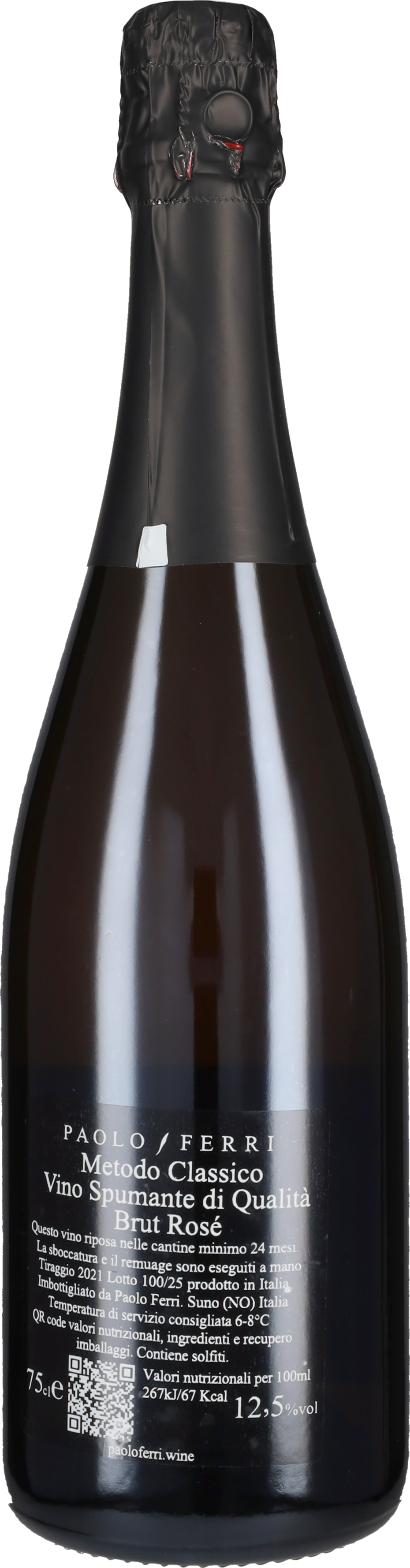
Sparkling wine Metodo Classico Rosé Brut 'Preja 24 Mesi' Paolo FerriThe Brut Rosé Spumante Paolo Ferri Metodo Classico ‘Preja 30 Mesi’ stands out for its scents of flowers and red fruits. Like the other sparkling wines produced by Paolo Ferri, the long aging on the lees in bottle of the ‘Preja 30 Mesi’ Brut Rosé takes place in the splendid medieval cellars of Villa Bono, a historic eighteenth-century villa located in Vaprio d’Agogna, in the province of Novara. Here, over 25,000 bottles signed by Paolo Ferri rest, awaiting the moment of disgorging which will mark their final release on the market in a few months. Paolo Ferri’s ‘Preja 30 Mesi’ Spumante Metodo Classico Rosé Brut is born from a blend of Pinot Noir grapes (60%) and another red berry variety (40%), grown on morainic and alluvial soils in a cool climate characterized by significant temperature variations between day and night, an ideal condition for the production of great sparkling bases. In the cellar, vinification of carefully selected clusters takes place in rosé, with a short skin maceration. This is followed by the alcoholic fermentation of the must in stainless steel tanks, with the sparkling base subsequently undergoing refermentation in bottle according to the Metodo Classico. The aging on the lees in glass lasts for at least 30 months, after which the wine undergoes disgorging and subsequent Brut dosage. The ‘Preja 30 Mesi’ Spumante Metodo Classico Brut Rosé Paolo Ferri has a clear pink color with a fine and persistent perlage. From the glass emerge pleasant scents of blackberry, plum, raspberry, orange, and rose petals, enriched by nuances of bread crust due to prolonged contact with the lees. On the palate, it shows a vibrant youthful freshness, with persistent fruity and floral sensations accompanying the finish.16,00 £*Shipping: 48,00 £Secure redirect to the provider
-
Champagne Rosé Brut Nature ‘Eclat de Pinot’ Justin MaillardThe young producer Justin Maillard presents the Champagne Rosé Brut Nature ‘Eclat de Pinot Rosé’, a "pink" expression of Pinot Noir from the Aube region that stands out for its pleasant almond finish. It's precisely the distinctive finish reminiscent of bitter almond that gives a gastronomic dimension to this Champagne, making it a perfect bubbly for any meal. Justin Maillard Champagne Brut Nature ‘Eclat de Pinot’ Rosé originates solely from Pinot Noir grapes grown on brown and limestone soils with Kimmeridgian marl subsoil. The vineyards were planted 25 years ago in the municipalities of Polisot and Val Colas Robin and are managed without the use of herbicides, pesticides, or other synthetic chemicals. After the harvest, the grapes undergo a 72-hour whole-cluster skin maceration process, which determines the wine's pink color, accompanied by gentle foot treading. Alcoholic fermentation and subsequent malolactic fermentation occur spontaneously in stainless steel tanks and concrete vats, the same wine containers where the base wine matures for a few months on fine lees. This is followed by bottle fermentation according to the Champagne method and then a long aging on yeast in glass before disgorgement à la volée. Throughout the production process, the use of clarification operations or cold treatments is excluded, while sulfite additions are minimal or nonexistent. The Champagne Brut Nature ‘Eclat de Pinot’ Rosé by Justin Maillard has a pale antique pink color. The aromatic profile is intriguing with hints of cherry, strawberry, lychee, lemon, pear, butter, and almond. The palate development is fresh and lively, with great elegance, and a very pleasant finish reminiscent of bitter almond.59,00 £*Shipping: 48,00 £Secure redirect to the provider
-
Champagne Rosé Brut 'Le Rosé' LansonLanson's Champagne Rosé Brut "Le Rosé" is produced by a winery with centuries-old origins, which has always been committed to the production of quality Champagne recognised throughout the world. Its working philosophy is aimed at creating a product that can become an ambassador of the potential of its land in the world, and so it has been, being drunk in some 80 countries around the world. It was, moreover, appointed official champagne of the British royal family as early as 1900 by Queen Victoria. Peculiar is the symbol that appears on each label, reminiscent of the 'Maltese Cross', a long-standing symbol of kindness and hospitality. The grapes that make up Lanson's Champagne Rosé Brut "Le Rosé" come from around 100 different crus between Grand and Premier Crus, which gives the final product a rare elegance. Temperatures in summer are high and sultry, while in winter the climate is cold with rare frosts. The grapes are harvested strictly by hand to select the best bunches. In the cellar, alcoholic fermentation occurs in steel with a mixture of red, white and rosé wines and a second refermentation in the bottle according to the Chapenoise method. It matures 48 months on the lees. At the sight of Lanson's Champagne Rosé Brut "Le Rosé" appears a wonderful salmon pink with a fine perlage and good persistence. On the nose there are raspberry, pomegranate and citrus notes with a delicate scent of roses on the finish; on the palate there is a good mineral in combination with fruit flavours such as strawberries, redcurrants and citrus. It goes well with smoked fish dishes such as salmon in a sesame and fennel crust, sweet and sour tuna and spoon desserts with strawberries and custard. Excellent to sip for summer evenings by the sea with lifelong friends or for romantic candlelit dinners, enjoying a refined and unique product.62,00 £*Shipping: 48,00 £Secure redirect to the provider
-
What is the value of Moët & Chandon Brut Impérial Rosé from 1990?
The value of Moët & Chandon Brut Impérial Rosé from 1990 can vary depending on factors such as its condition, provenance, and current market demand. Generally, a well-preserved bottle of this vintage champagne can be quite valuable to collectors and enthusiasts due to its age and rarity. It is recommended to consult with wine experts or auction houses to get an accurate valuation of this specific bottle. **
-
White or rosé tuna?
White tuna is typically the preferred choice for sushi and sashimi due to its mild flavor and firm texture. Rosé tuna, also known as bluefin tuna, is prized for its rich, fatty flesh and is often used in dishes like sashimi and sushi. Both types of tuna have their own unique qualities, so the choice ultimately depends on personal preference and the specific dish being prepared. **
-
How long does a Chardonnay Brut last?
Chardonnay Brut typically has a shelf life of 3-5 years if stored properly. It is best enjoyed within the first 1-2 years to fully appreciate its fresh and fruity flavors. However, some higher quality Chardonnay Brut wines can age gracefully for up to 5 years, developing more complex and toasty characteristics. It is important to store the wine in a cool, dark place and away from any strong odors to ensure it lasts as long as possible. **
-
What is the shelf life of rosé wine?
The shelf life of rosé wine can vary depending on the specific wine and how it is stored. In general, most rosé wines are best consumed within 1-3 years of their vintage date. However, some higher quality rosé wines can age well for up to 5 years or more if stored in a cool, dark place. It's important to note that once a bottle of rosé wine is opened, it should be consumed within a few days to a week to maintain its freshness and flavor. **
Similar search terms for Sparkling-Rosé-Brut-Nature
-
What does "Brut des Teufels" mean in a dream?
"Brut des Teufels" is a German phrase that translates to "Devil's brood" in English. In a dream, this phrase could symbolize feelings of fear, danger, or the presence of evil forces. It may represent inner turmoil, negative influences, or a sense of being overwhelmed by dark emotions or experiences. It could also suggest a need to confront and overcome negative aspects of oneself or external challenges. **
-
How long does open rosé wine last in the refrigerator?
Open rosé wine can last in the refrigerator for about 3-5 days. However, it's important to note that the flavor and quality of the wine may start to deteriorate after the first day or two. To prolong the life of the wine, it's best to re-cork the bottle tightly and store it in the coldest part of the refrigerator. Using a wine stopper or vacuum pump can also help to preserve the wine for a little longer. **
-
Which dish or meal pairs well with a rosé wine?
A rosé wine pairs well with a variety of dishes due to its versatility. It complements light and fresh flavors, making it a great match for dishes such as salads, seafood, grilled vegetables, and light pasta dishes. The wine's acidity and fruitiness also make it a good pairing for spicy foods, such as Thai or Indian cuisine. Overall, rosé wine is a great choice for a wide range of dishes, making it a versatile option for pairing with meals. **
-
Can I use rosé instead of white wine for deglazing?
Yes, you can use rosé instead of white wine for deglazing. Rosé wine can add a slightly different flavor profile to the dish compared to white wine, but it can still effectively deglaze the pan and add depth of flavor to your dish. Just keep in mind that the final flavor of the dish may be slightly different than if you had used white wine. **
* All prices are inclusive of VAT and, if applicable, plus shipping costs. The offer information is based on the details provided by the respective shop and is updated through automated processes. Real-time updates do not occur, so deviations can occur in individual cases. ** Note: Parts of this content were created by AI.