Buy sun-studio.eu ?
We are moving the project
sun-studio.eu .
Are you interested in purchasing the domain
sun-studio.eu ?
domain@kv-gmbh.de · 0541-91531010
Buy sun-studio.eu ?
Why is the atmosphere in low latitudes much denser than in high latitudes?
The atmosphere in low latitudes is denser than in high latitudes because the Sun's rays hit the Earth more directly at the equator, causing the air to warm up and expand. This expansion leads to lower air pressure and a higher concentration of air molecules in the lower atmosphere. In contrast, at higher latitudes, the Sun's rays hit the Earth at an angle, causing the air to be cooler and more compact, resulting in a thinner atmosphere. **
Why is the atmosphere much denser in low latitudes than in high latitudes?
The atmosphere is denser in low latitudes than in high latitudes because the sun's rays are more direct at the equator, causing the air to be warmer and less dense. This warmth leads to the air expanding and rising, creating lower pressure at the surface. In contrast, at higher latitudes, the sun's rays are more spread out, leading to cooler temperatures and denser air. Additionally, the Coriolis effect at high latitudes causes air to circulate and mix more, further reducing its density. **

Similar search terms for Latitudes
Top-Angebote
Products related to Latitudes:
-
Perfect Picks Market Sun Stick Sunscreen Lightweight UV Protection For Face And Body Sun Stick Sunscreen Lightweight UV Protection For Face And BodySun protection should feel effortless, not heavy or greasy. This sleek sun stick sunscreen glides on smoothly, delivering powerful SPF50 defense without disrupting your look. Designed for busy lifestyles, it offers a breathable, matte finish that...39,97 $*Shipping: 0,00 $Secure redirect to the provider
-
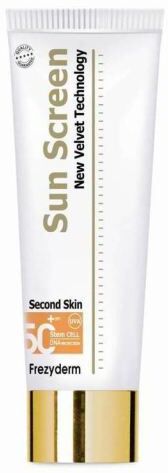
Velvet Sun Screen Velvet Sunscreen Body Spf 50+ 125 mlHealth and Beauty Creams Velvet Sun Screen Velvet Sunscreen Body Spf 50+ 125 ml - Ideal for phototypes I & II, sensitive skin, and skin with moles or scars. Daily use. - Prevents signs of aging and protects against white spots caused by sun exposure. - Suitable for all skin types and all ages. Due to its larger volume, it is suitable for application to large areas of the body, such as the arms, back, and décolletage. - Very high UVB 50+ UVA VIS // IRA protection.30,88 £*Shipping: 3,99 £Secure redirect to the provider
-
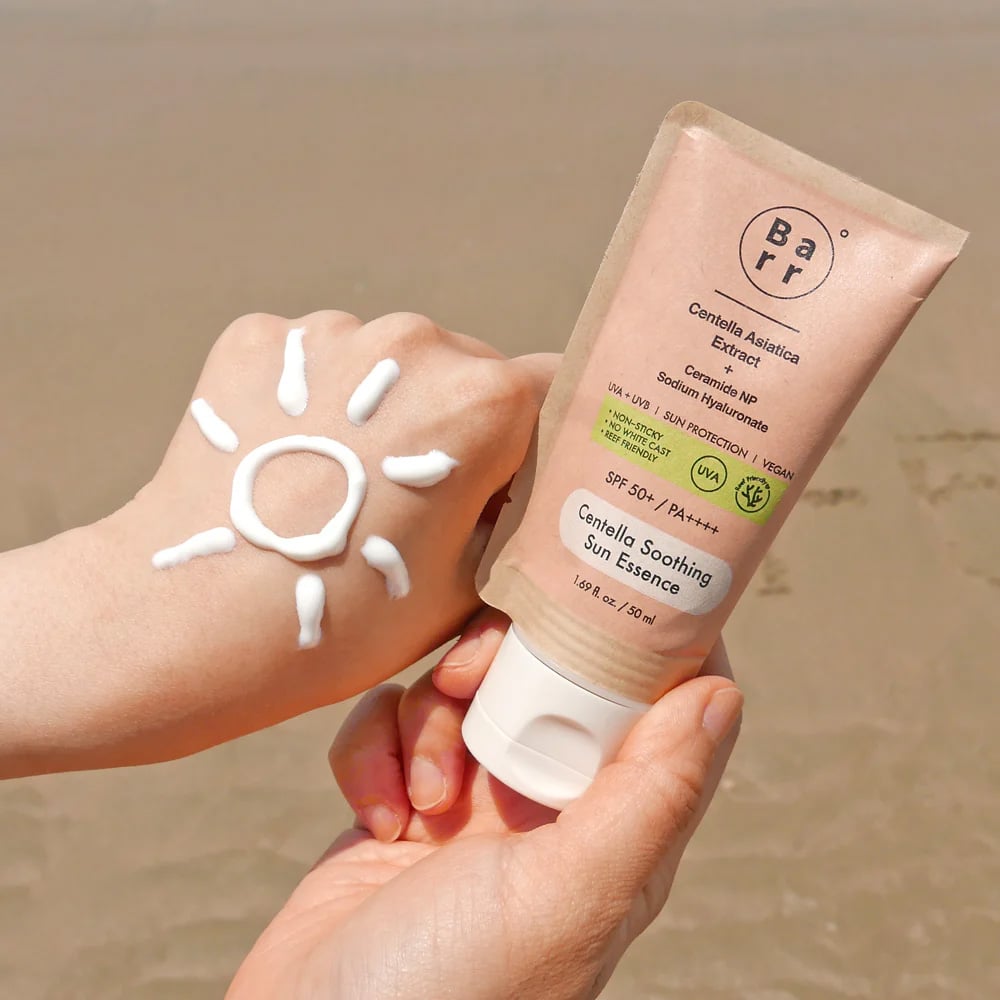
G9 Skin White in Milk Sun Plus Sunscreen 40mL SPF50+A sunscreen for wrinkles and signs of ageing. White in Milk Sun Plus SPF50+/ PA++++, effectively safeguarding the skin against the harmful effects of UVA and UVB rays, all while ensuring there's no white residue left behind. This daily, broad-spectrum sunscreen easily absorbs into the skin, offering SPF50+ and comprehensive protection against both UVA and UVB rays.12,24 £*Shipping: 5,28 £Secure redirect to the provider


-
Why is the atmosphere in low latitudes much thicker than in high latitudes?
The atmosphere in low latitudes is much thicker than in high latitudes because the sun's rays hit the Earth more directly at the equator, causing the air to warm up and rise. This rising warm air creates lower pressure at the surface, drawing in more air from the surrounding areas. In contrast, at higher latitudes, the sun's rays hit the Earth at a lower angle, causing the air to be cooler and denser, resulting in a thinner atmosphere. **
-
What is the angle of incidence of the sun in the mid-latitudes?
The angle of incidence of the sun in the mid-latitudes varies throughout the year due to the tilt of the Earth's axis. During the summer solstice, the angle of incidence is at its highest, around 70-90 degrees, resulting in more direct sunlight and warmer temperatures. In contrast, during the winter solstice, the angle of incidence is at its lowest, around 0-30 degrees, leading to less direct sunlight and cooler temperatures. Overall, the angle of incidence in the mid-latitudes plays a significant role in determining the intensity of sunlight and the changing seasons. **
-
How do tropical rainforests and forests in our latitudes differ, especially with regard to the humus layer?
Tropical rainforests and forests in our latitudes differ in several ways, especially with regard to the humus layer. In tropical rainforests, the humus layer is typically thicker and more nutrient-rich due to the rapid decomposition of organic matter in the warm and moist environment. This results in a diverse and dense plant and animal life. In contrast, forests in our latitudes have a thinner humus layer, as the cooler temperatures and slower decomposition rates lead to a slower accumulation of organic matter. This results in a less diverse and more seasonal plant and animal life. **
-
Why is there different climate on different latitudes?
Different latitudes receive varying amounts of sunlight due to the curvature of the Earth. Near the equator, sunlight is more direct and concentrated, leading to warmer temperatures. As you move towards the poles, sunlight is more spread out and less intense, resulting in cooler temperatures. This variation in sunlight and temperature creates different climate zones at different latitudes. **
How do I describe the latitudes of Brazil?
Brazil is located in the Southern Hemisphere and spans a wide range of latitudes, from approximately 5 degrees north to 33 degrees south. This means that Brazil experiences a variety of climates, from tropical in the north to subtropical and temperate in the south. The diverse latitudes also contribute to the country's rich biodiversity and varied landscapes, including the Amazon rainforest in the north and the grasslands of the Pampas in the south. **
What are the temperate zones in the mid-latitudes?
The temperate zones in the mid-latitudes are regions located between the Tropic of Cancer and the Arctic Circle in the Northern Hemisphere, and between the Tropic of Capricorn and the Antarctic Circle in the Southern Hemisphere. These zones experience moderate temperatures compared to the tropics and polar regions, with distinct seasons including warm summers and cool winters. The temperate zones are characterized by a variety of ecosystems, including deciduous forests, grasslands, and Mediterranean climates, making them highly diverse in terms of flora and fauna. **
Top-Angebote
Products related to Latitudes:
-
Neusc Sun Stick Sunscreen 24 gr SPF 30Health and Beauty Creams Neusc Sun Stick Sunscreen 24 gr SPF 30 The Neusc formula, with its combination of UVA/UVB filters, protects the skin from the harmful effects of the sun by adding a physical-chemical filter to the skin's surface. It forms a barrier that protects against dehydration and redness caused by solar radiation. It is especially recommended for dull skin with very high radiation, for fair skin with high or very high radiation, and for very fair skin with medium or high radiation. Directions for use: External use. Gently glide on in a single stroke and spread over the entire area with your fingertips until completely absorbed. Apply 15 minutes before sun exposure and reapply every 2 hours.7,33 £*Shipping: 3,99 £Secure redirect to the provider
-
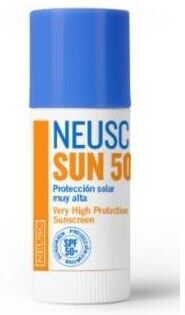
Neusc Sun Stick Sunscreen 24 gr SPF 50+Health and Beauty Creams Neusc Sun Stick Sunscreen 24 gr SPF 50+ The Neusc formula, with its combination of UVA/UVB filters, protects the skin from the harmful effects of the sun by adding a physical-chemical filter to the skin's surface. It forms a barrier that protects against dehydration and redness caused by solar radiation. It is especially recommended for dull skin with very high radiation, for fair skin with high or very high radiation, and for very fair skin with medium or high radiation. Directions for use: External use. Gently glide on in a single stroke and spread over the entire area with your fingertips until completely absorbed. Apply 15 minutes before sun exposure and reapply every 2 hours.12,76 £*Shipping: 3,99 £Secure redirect to the provider
-
Perfect Picks Market Sun Stick Sunscreen Lightweight UV Protection For Face And Body Sun Stick Sunscreen Lightweight UV Protection For Face And BodySun protection should feel effortless, not heavy or greasy. This sleek sun stick sunscreen glides on smoothly, delivering powerful SPF50 defense without disrupting your look. Designed for busy lifestyles, it offers a breathable, matte finish that...39,97 $*Shipping: 0,00 $Secure redirect to the provider
-
Why is the atmosphere in low latitudes much denser than in high latitudes?
The atmosphere in low latitudes is denser than in high latitudes because the Sun's rays hit the Earth more directly at the equator, causing the air to warm up and expand. This expansion leads to lower air pressure and a higher concentration of air molecules in the lower atmosphere. In contrast, at higher latitudes, the Sun's rays hit the Earth at an angle, causing the air to be cooler and more compact, resulting in a thinner atmosphere. **
-
Why is the atmosphere much denser in low latitudes than in high latitudes?
The atmosphere is denser in low latitudes than in high latitudes because the sun's rays are more direct at the equator, causing the air to be warmer and less dense. This warmth leads to the air expanding and rising, creating lower pressure at the surface. In contrast, at higher latitudes, the sun's rays are more spread out, leading to cooler temperatures and denser air. Additionally, the Coriolis effect at high latitudes causes air to circulate and mix more, further reducing its density. **
-
Why is the atmosphere in low latitudes much thicker than in high latitudes?
The atmosphere in low latitudes is much thicker than in high latitudes because the sun's rays hit the Earth more directly at the equator, causing the air to warm up and rise. This rising warm air creates lower pressure at the surface, drawing in more air from the surrounding areas. In contrast, at higher latitudes, the sun's rays hit the Earth at a lower angle, causing the air to be cooler and denser, resulting in a thinner atmosphere. **
-
What is the angle of incidence of the sun in the mid-latitudes?
The angle of incidence of the sun in the mid-latitudes varies throughout the year due to the tilt of the Earth's axis. During the summer solstice, the angle of incidence is at its highest, around 70-90 degrees, resulting in more direct sunlight and warmer temperatures. In contrast, during the winter solstice, the angle of incidence is at its lowest, around 0-30 degrees, leading to less direct sunlight and cooler temperatures. Overall, the angle of incidence in the mid-latitudes plays a significant role in determining the intensity of sunlight and the changing seasons. **
Similar search terms for Latitudes
-
Velvet Sun Screen Velvet Sunscreen Body Spf 50+ 125 mlHealth and Beauty Creams Velvet Sun Screen Velvet Sunscreen Body Spf 50+ 125 ml - Ideal for phototypes I & II, sensitive skin, and skin with moles or scars. Daily use. - Prevents signs of aging and protects against white spots caused by sun exposure. - Suitable for all skin types and all ages. Due to its larger volume, it is suitable for application to large areas of the body, such as the arms, back, and décolletage. - Very high UVB 50+ UVA VIS // IRA protection.30,88 £*Shipping: 3,99 £Secure redirect to the provider
-
G9 Skin White in Milk Sun Plus Sunscreen 40mL SPF50+A sunscreen for wrinkles and signs of ageing. White in Milk Sun Plus SPF50+/ PA++++, effectively safeguarding the skin against the harmful effects of UVA and UVB rays, all while ensuring there's no white residue left behind. This daily, broad-spectrum sunscreen easily absorbs into the skin, offering SPF50+ and comprehensive protection against both UVA and UVB rays.12,24 £*Shipping: 5,28 £Secure redirect to the provider
-
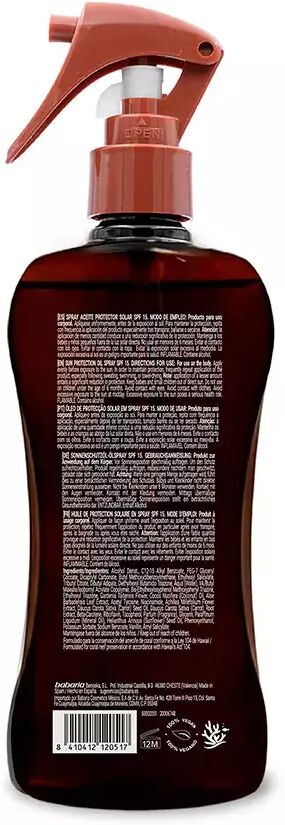
Babaria Sun Lovers Bronze Spray Sunscreen Oil SPF15 300 mlHealth and Beauty Creams Babaria Sun Lovers Bronze Spray Sunscreen Oil SPF15 300 ml What is Sun Lovers Bronze Spray Sunscreen Oil SPF15? Sun Lovers Bronze Spray Sunscreen Oil SPF15 is the spray-on sun oil from Babaria's Bronze range, offering medium protection. It's an oil, not a lotion: simply spray it on, spread it with your hand, and it absorbs instantly, leaving no thick, shiny residue like traditional beach oils. It protects against UVB, UVA, and infrared rays. Benefits SPF 15 is the level to choose when you already have a base color and want to enhance your tan without burning. The formula includes a tan accelerator, coconut oil, Tahitian monoi oil, and carrot oil with beta-carotene, which is what gives that golden, rather than reddish, tone. It also contains aloe vera and niacinamide to prevent dryness. The finish is that of a traditional tanning oil, but with sunscreen and without the sticky feeling. Suitable for vegans, dermatologically tested and with a coral-friendly formula according to the manufacturer. Who is it for? Suitable for all skin types, including sensitive skin, and especially for skin that already has some color and tans easily. Very fair skin or first-time sun exposure requires a higher SPF. How to apply Sun Lovers Bronze Spray Sunscreen Oil SPF15? Shake the container. Spray from about 20 centimeters away, covering the dry skin completely, and spread with your hand to even out the spray. Product use Reapply often, and without fail after every bath or if you sweat heavily. For body use. Do not spray towards the face or near a flame, and be careful not to get it on clothing.12,15 £*Shipping: 3,99 £Secure redirect to the provider
-
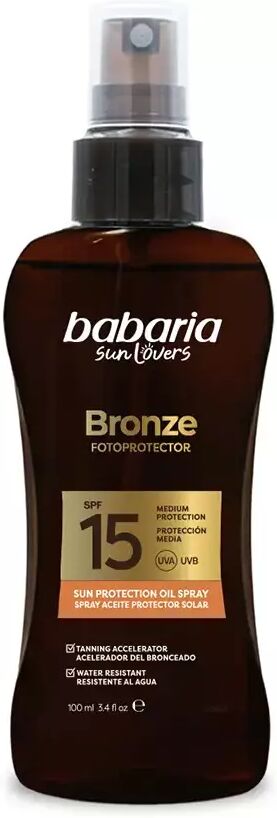
Babaria Sun Lovers Bronze Spray Sunscreen Oil SPF15 100 mlHealth and Beauty Creams Babaria Sun Lovers Bronze Spray Sunscreen Oil SPF15 100 ml What is Sun Lovers Bronze Spray Sunscreen Oil SPF15? Sun Lovers Bronze Spray Sunscreen Oil SPF15 is the spray-on sun oil from Babaria's Bronze range, offering medium protection. It's an oil, not a lotion: simply spray it on, spread it with your hand, and it absorbs instantly, leaving no thick, shiny residue like traditional beach oils. It protects against UVB, UVA, and infrared rays. Benefits SPF 15 is the level to choose when you already have a base color and want to enhance your tan without burning. The formula includes a tan accelerator, coconut oil, Tahitian monoi oil, and carrot oil with beta-carotene, which is what gives that golden, rather than reddish, tone. It also contains aloe vera and niacinamide to prevent dryness. The finish is that of a traditional tanning oil, but with sunscreen and without the sticky feeling. Suitable for vegans, dermatologically tested and with a coral-friendly formula according to the manufacturer. Who is it for? Suitable for all skin types, including sensitive skin, and especially for skin that already has some color and tans easily. Very fair skin or first-time sun exposure requires a higher SPF. How to apply Sun Lovers Bronze Spray Sunscreen Oil SPF15? Shake the container. Spray from about 20 centimeters away, covering the dry skin completely, and spread with your hand to even out the spray. Product use Reapply often, and without fail after every bath or if you sweat heavily. For body use. Do not spray towards the face or near a flame, and be careful not to get it on clothing.6,26 £*Shipping: 3,99 £Secure redirect to the provider
-
How do tropical rainforests and forests in our latitudes differ, especially with regard to the humus layer?
Tropical rainforests and forests in our latitudes differ in several ways, especially with regard to the humus layer. In tropical rainforests, the humus layer is typically thicker and more nutrient-rich due to the rapid decomposition of organic matter in the warm and moist environment. This results in a diverse and dense plant and animal life. In contrast, forests in our latitudes have a thinner humus layer, as the cooler temperatures and slower decomposition rates lead to a slower accumulation of organic matter. This results in a less diverse and more seasonal plant and animal life. **
-
Why is there different climate on different latitudes?
Different latitudes receive varying amounts of sunlight due to the curvature of the Earth. Near the equator, sunlight is more direct and concentrated, leading to warmer temperatures. As you move towards the poles, sunlight is more spread out and less intense, resulting in cooler temperatures. This variation in sunlight and temperature creates different climate zones at different latitudes. **
-
How do I describe the latitudes of Brazil?
Brazil is located in the Southern Hemisphere and spans a wide range of latitudes, from approximately 5 degrees north to 33 degrees south. This means that Brazil experiences a variety of climates, from tropical in the north to subtropical and temperate in the south. The diverse latitudes also contribute to the country's rich biodiversity and varied landscapes, including the Amazon rainforest in the north and the grasslands of the Pampas in the south. **
-
What are the temperate zones in the mid-latitudes?
The temperate zones in the mid-latitudes are regions located between the Tropic of Cancer and the Arctic Circle in the Northern Hemisphere, and between the Tropic of Capricorn and the Antarctic Circle in the Southern Hemisphere. These zones experience moderate temperatures compared to the tropics and polar regions, with distinct seasons including warm summers and cool winters. The temperate zones are characterized by a variety of ecosystems, including deciduous forests, grasslands, and Mediterranean climates, making them highly diverse in terms of flora and fauna. **
* All prices are inclusive of VAT and, if applicable, plus shipping costs. The offer information is based on the details provided by the respective shop and is updated through automated processes. Real-time updates do not occur, so deviations can occur in individual cases. ** Note: Parts of this content were created by AI.